10 Essential SEO Tips for Small Businesses
Improve rankings, drive targeted traffic, and grow your online presence with proven strategies.
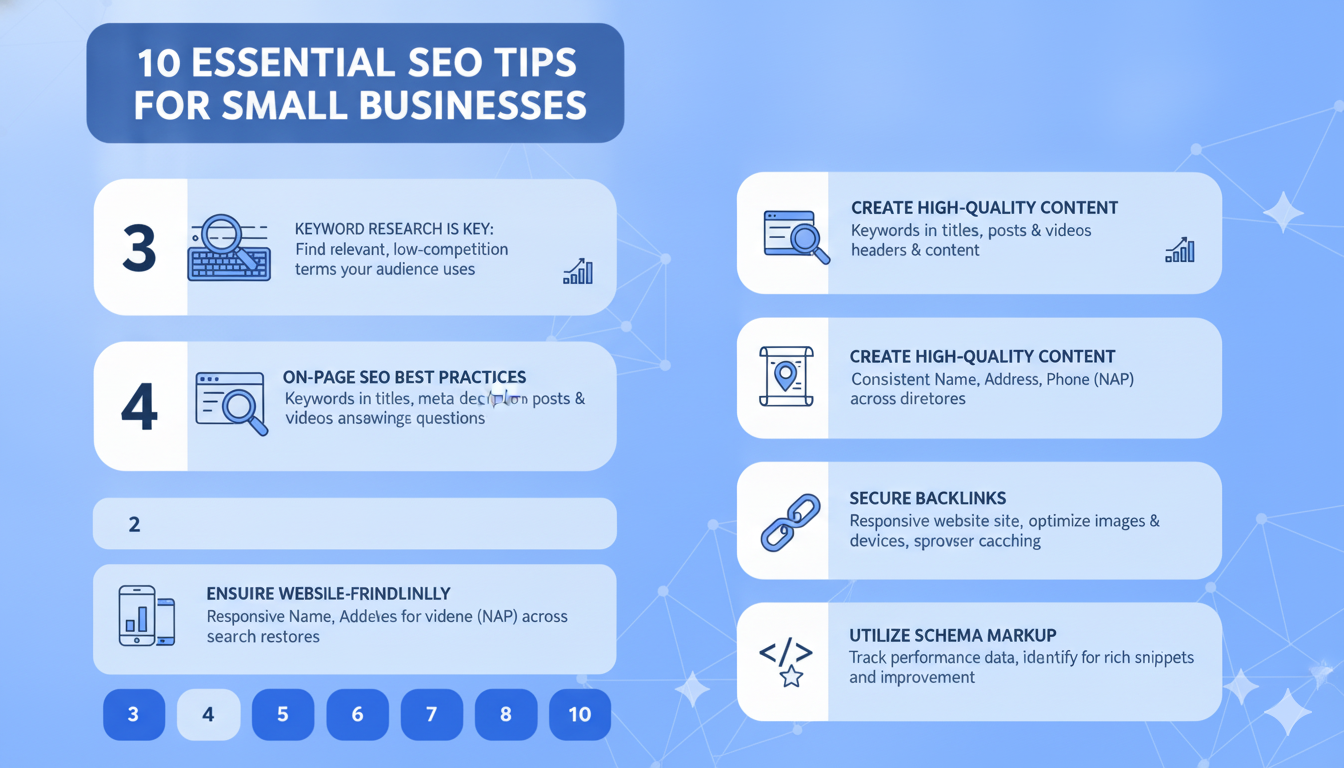
Organic search drives over 68% of online experiences — invest in SEO.
Search Engine Optimization (SEO) has become one of the most powerful digital marketing strategies for small businesses. Recent industry research shows that approximately 68% of online experiences begin with a search engine, while organic search continues to generate a significant share of website traffic worldwide. Businesses that invest in structured SEO strategies consistently report higher visibility, better lead generation, and sustainable long-term growth.
For small businesses competing against larger brands with bigger marketing budgets, SEO offers a unique advantage. Instead of spending thousands on advertising every month, you can attract potential customers organically by appearing when people actively search for your products or services.
This guide explores the 10 essential SEO tips for small businesses, helping you improve rankings, increase organic traffic, and build a stronger online presence.
Why SEO Matters for Small Businesses
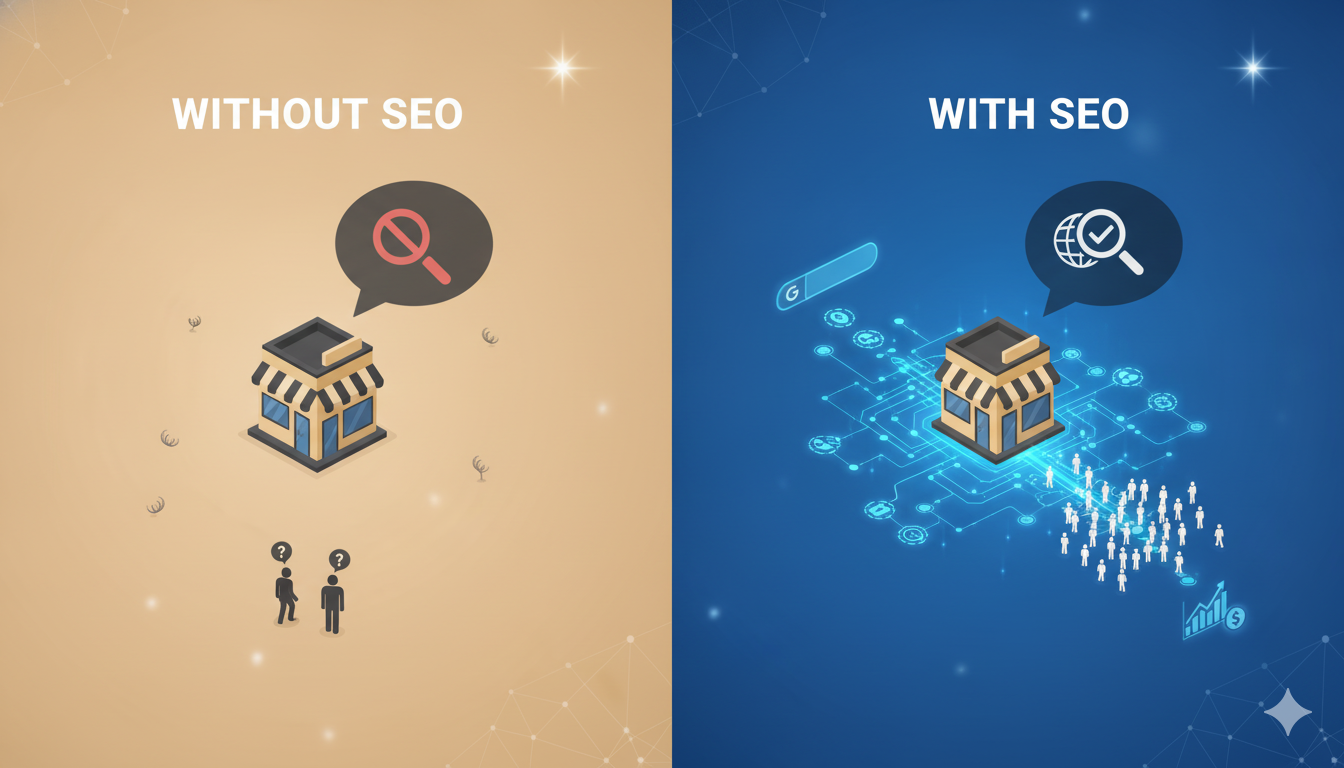
Imagine opening a beautiful store in the middle of a desert where nobody can find it. That is exactly what happens when a business launches a website without SEO. You may have excellent products, outstanding customer service, and competitive prices, but if potential customers cannot find you online, your business remains invisible.
SEO acts like a digital roadmap that guides search engines and users to your website. Unlike paid advertising, where traffic stops the moment you stop spending money, SEO continues delivering value over time. A well-optimized website can generate leads and sales for months or even years after content is published.
💡 The Growing Importance of Organic Search: Search behavior continues to evolve as AI-powered search experiences become more common. Businesses that create authoritative, useful content still benefit from increased visibility and trust. Research shows that companies actively investing in SEO and AI-driven search optimization see steady growth.
Conduct Smart Keyword Research
Keyword research is the foundation of every successful SEO campaign. Without understanding what your audience is searching for, creating content becomes guesswork. Focus on long-tail keywords (e.g., "affordable SEO services for plumbers") — they often have lower competition and higher conversion rates.
| Keyword | Intent |
|---|---|
| What is SEO? | Informational |
| SEO tips for small businesses | Educational |
| Hire SEO consultant | Commercial |
| Best SEO agency near me | Transactional |
Tip: Target buyer-intent keywords to attract visitors ready to purchase.
Optimize Your Website Structure
Clear navigation and logical categories help both users and search engines. Every important page should be reachable within 2-3 clicks. Implement breadcrumbs, internal links, and a clear hierarchy (Home > Services > Service page). Good structure distributes link equity and improves crawlability.
Focus on High-Quality, Helpful Content
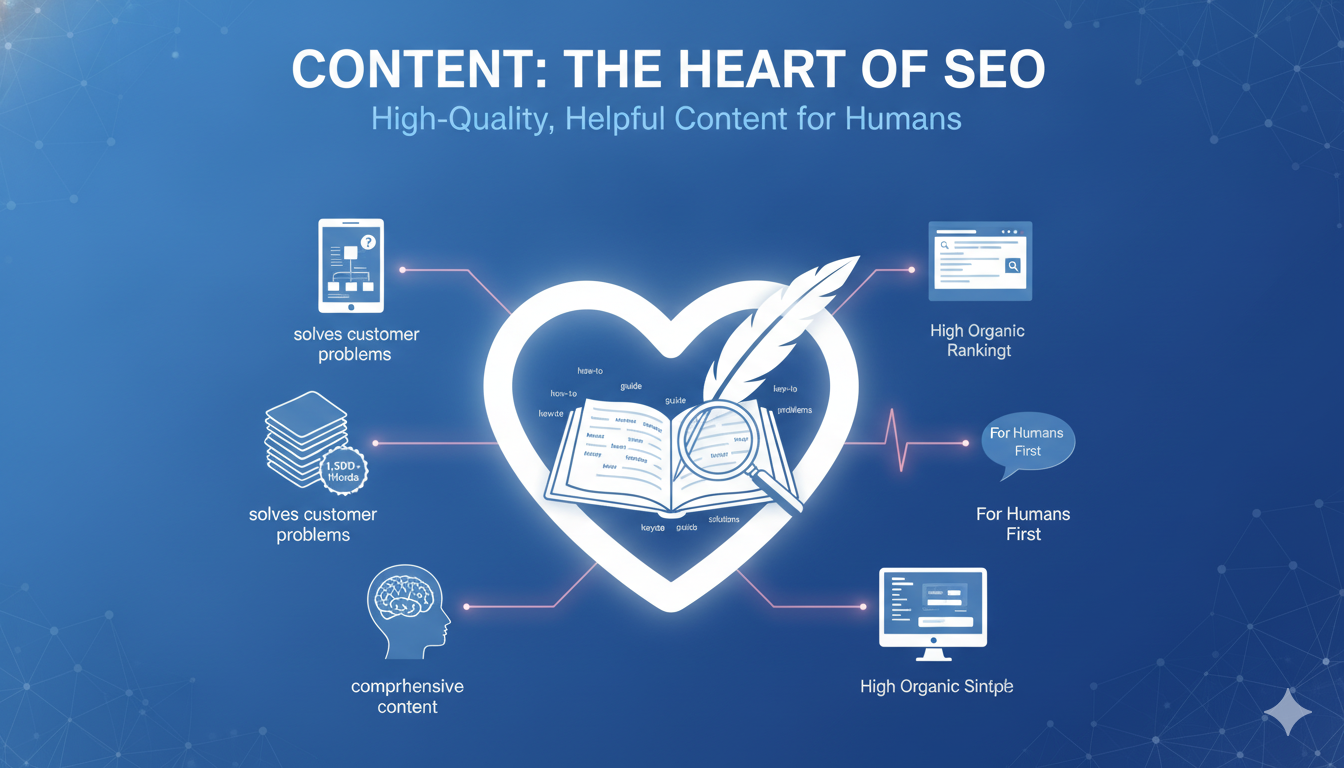
Content remains the heart of SEO. Publish content that solves real customer problems: how-to guides, case studies, product comparisons. Research shows comprehensive content (1,500+ words) often ranks better. Always write for humans first, naturally incorporating keywords.
Improve Website Speed
Pages that load in under 2 seconds convert significantly better. Use tools like Google PageSpeed Insights. Compress images (WebP), enable caching, minify CSS/JS, and use a CDN. Speed is a confirmed ranking factor and crucial for user retention.
Optimize for Mobile Users (Mobile-First)
Google primarily uses the mobile version of your site for indexing. Ensure responsive design, readable fonts, easy-to-tap buttons, and fast mobile load times. More than half of all web traffic comes from mobile devices — don't ignore mobile UX.
Master Local SEO & Google Business Profile
For small businesses, local SEO delivers foot traffic and calls. Claim and optimize your Google Business Profile: include accurate NAP (name, address, phone), categories, photos, and gather positive reviews. Also build local citations and location-specific landing pages.
Build Quality Backlinks Ethically
Backlinks remain a top ranking signal. Focus on guest posts, partnerships, industry directories, original research, and broken link building. Avoid spammy link schemes. Quality over quantity: a single backlink from an authoritative site can boost rankings significantly.
Optimize On-Page SEO Elements
Title tags, meta descriptions, headers (H1, H2), image alt text, and clean URLs matter. Include primary keywords naturally. Write compelling meta descriptions to improve click-through rates. Use schema markup (e.g., LocalBusiness, FAQ) to enhance rich snippets.
Track SEO Performance with Data
Use Google Analytics 4 and Google Search Console. Monitor organic traffic, keyword rankings, impressions, CTR, conversions, and bounce rate. Set up goals to measure actual leads/sales. Data-driven tweaks produce compounding results over time.
Prepare for AI Search & Future SEO
AI-powered search (Google SGE, Bing Chat) changes user behavior. Focus on authority, real-world expertise, and comprehensive, trustworthy content. Write like a helpful expert; cite credible sources; optimize for conversational queries. Early adopters gain an edge in AI-driven answer boxes.
Common SEO Mistakes Small Businesses Should Avoid
- Ignoring keyword research and targeting wrong terms
- Thin or duplicate content across pages
- Neglecting mobile optimization
- Buying low-quality backlinks (risks penalties)
- No local SEO / unclaimed Google Business Profile
- Ignoring technical errors (broken links, slow speed)
- Not tracking performance or conversion metrics
Industry studies show that businesses focusing on SEO fundamentals consistently outperform those chasing shortcuts. Patience and consistency win.
Conclusion
SEO remains one of the most effective growth strategies for small businesses. While search engines evolve with AI, core fundamentals stay relevant: understand your audience, deliver high-quality content, ensure technical performance, and build trust. Implement these 10 essential tips to improve organic rankings, drive targeted traffic, and achieve sustainable growth. Remember: SEO is a long-term investment — small consistent efforts lead to compounding results.
Frequently Asked Questions
Most small businesses start seeing measurable improvements within 3 to 6 months. Competitive niches may take longer, but the long-term ROI justifies the effort.
SEO provides sustainable long-term traffic; paid ads generate immediate visibility. Combining both (integrated strategy) delivers the best results for most small businesses.
There's no single factor, but high-quality relevant content + user experience + authoritative backlinks are consistently among the most influential signals.
Absolutely. Local SEO helps attract nearby customers with strong purchase intent. Optimizing Google Business Profile and local citations is essential for brick-and-mortar and service area businesses.
Track organic traffic, keyword rankings, conversion rate, leads/sales from organic search, click-through rates, and goal completions in Google Analytics. Focus on business outcomes, not just rankings.